


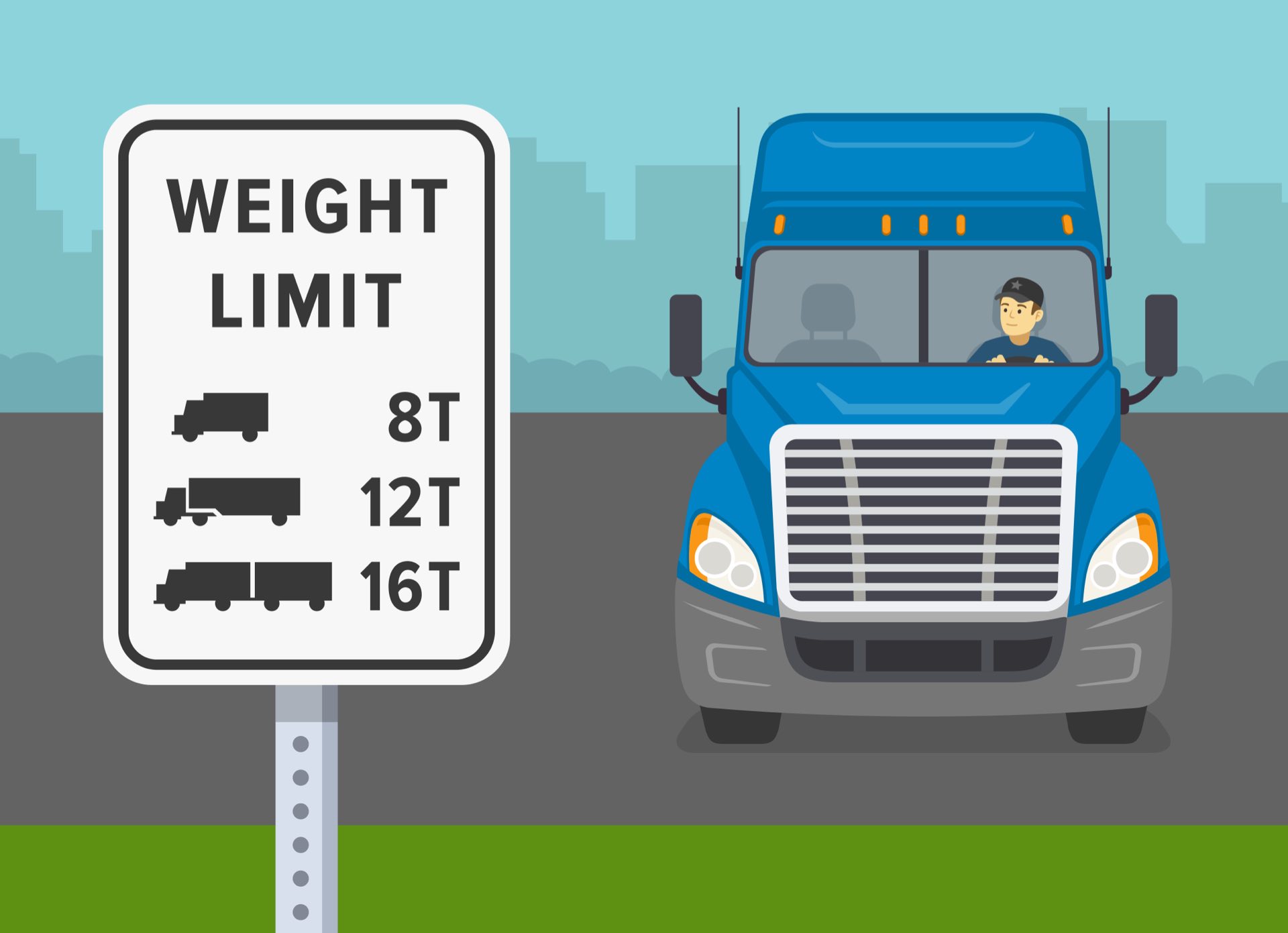
Many things can contribute to truck accidents in Portland, Oregon, resulting in extensive damages for all involved. One example of this is overweight truck accidents that are the result of overloading.
If you have been the victim of an overweight truck accident in Portland, Oregon, you need to reach out to a truck accident lawyer as soon as possible. At Henderson Taylor Law Firm, our team of truck accident attorneys has extensive experience handling truck crash claims and can help you get the best possible outcome.
Keep reading to find out when overweight truck accidents in Portland, Oregon, can occur and who is liable for these types of collisions.
Federal and State Weight Limits
Cargo loading negligence can result in serious truck accidents, increasing the risk of serious bodily injuries and property damage. That is why the Federal Motor Carrier Safety Administration has restrictions on how much commercial trucks can weigh. These restrictions work hand in hand with other size and height rules to ensure other drivers on the road are safe.
Oregon has weight regulations that apply to trailer, tractor, and cargo trucks, which include:
- 600 pounds per inch of tire width
- 20,000 pounds single axle
- 34,000 pounds tandem
- 80,000 pounds gross weight
Also, special permits are available for extended-weight trucks or heavy-haul weight trucks. This is the only legal option trucking companies have if their trucks cannot meet these weight limits.
The Dangers of Overloaded Trucks
Oregon drivers are already aware that commercial trucks pose a serious risk on the road. But why exactly are overloaded trucks so dangerous?
Here are some examples of why overweight trucks are so hazardous and how this can directly contribute to truck crashes.
Reduced Stability
Part of why there are trucking regulations in Oregon is that trucks can only operate optimally at a certain weight. Once that weight limit is exceeded, the truck is much harder to manage, and the cargo can become unpredictable.
A common example of this is when trucks are overloaded, and their center of gravity becomes unbalanced. The truck will become less stable and much harder for even the most experienced truck driver to safely operate.
When the truck’s center of gravity is unstable, this also greatly increases the risk of serious accidents, such as rollovers.
Delayed Braking
The heavier a truck is, the more difficult it is to stop. And the brake system will be under a significant strain, which will result in the truck needing more distance in order to stop in time.
Not only is there a risk of delayed braking, but the truck will also have more momentum. The added weight due to overloading naturally increases the speed of the truck, and when you combine that with reduced braking ability, this can create a recipe for disaster.
Shifting Cargo
In addition to being unstable, an overloaded truck may experience issues with its cargo shifting during transit. This could be the result of the cargo being loaded improperly, or the cargo may simply exceed what the truck can handle.
When the cargo shifts, this can throw off the trucks center of gravity, pulling it in the direction of the cargo.
Proving Liability in Portland Overloaded Truck Accidents
Part of why any type of truck accident can be difficult is that multiple parties could be held liable. So, when you file a commercial truck overload injury claim, you need to provide proof that another party was liable for your injuries.
The main thing to understand about liability for overweight truck accidents in Portland, Oregon, is that liability doesn’t always fall on one individual. Here are some examples of different parties that could hold all or a portion of liability for the accident:
- Trucking company: The trucking company could be liable for the accident for failing to maintain the weight restrictions.
- Truck driver: Additionally, the truck driver may hold some of the fault if they inspected the vehicle and failed to act when they noticed that it was overloaded or they drove recklessly, which contributed to the accident.
- Cargo loaders: The cargo loaders are usually responsible for loading the trucks cargo, so it’s very likely that they would be liable for improperly loading or overloading the truck.
To avoid running into issues with your claim, you should consult with a truck accident attorney. An attorney can help you determine who is liable and can help you track down crucial evidence to support your claim. This could include things like the police report, medical documentation, black box data, surveillance footage, witness statements, etc.
Hire an Experienced Truck Accident Attorney at Henderson Taylor Law Firm
If a commercial truck is overloaded, this negligence puts all of the other vehicles on the road at risk. So, if you have been injured in an overloaded truck accident, you have every right to file a claim to get compensation.
At Henderson Taylor Law Firm, our Portland truck accident lawyers are committed to defending the downtrodden and helping our clients get the outcome they deserve for their truck accident claims. So, for expert legal representation from one of our attorneys, contact us today at 360-737-1478 or fill out our online form.
FAQ Section
What are the truck weight limits in Oregon?
The standard weight limits for commercial trucks in Oregon include 600 pounds per inch of tire width, 20,000 pounds single axle, 34,000 pounds tandem, and 80,000 pounds gross weight. However, Oregon does provide special permits for trucks that cannot stay within these weight limits.
Can multiple parties be responsible for overloading?
Yes, because of Oregon’s laws, you can hold multiple parties at fault for an overloaded truck crash. In this type of accident, it is quite common since multiple parties are usually involved in loading or inspecting the trucks.
How do I prove a truck was overweight?
You and your attorney should be able to access important truck documents that provide information regarding the truck’s weight and cargo. You can also provide supporting evidence, such as witness statements or expert testimony, that can help show that the cargo directly contributed to the accident.