



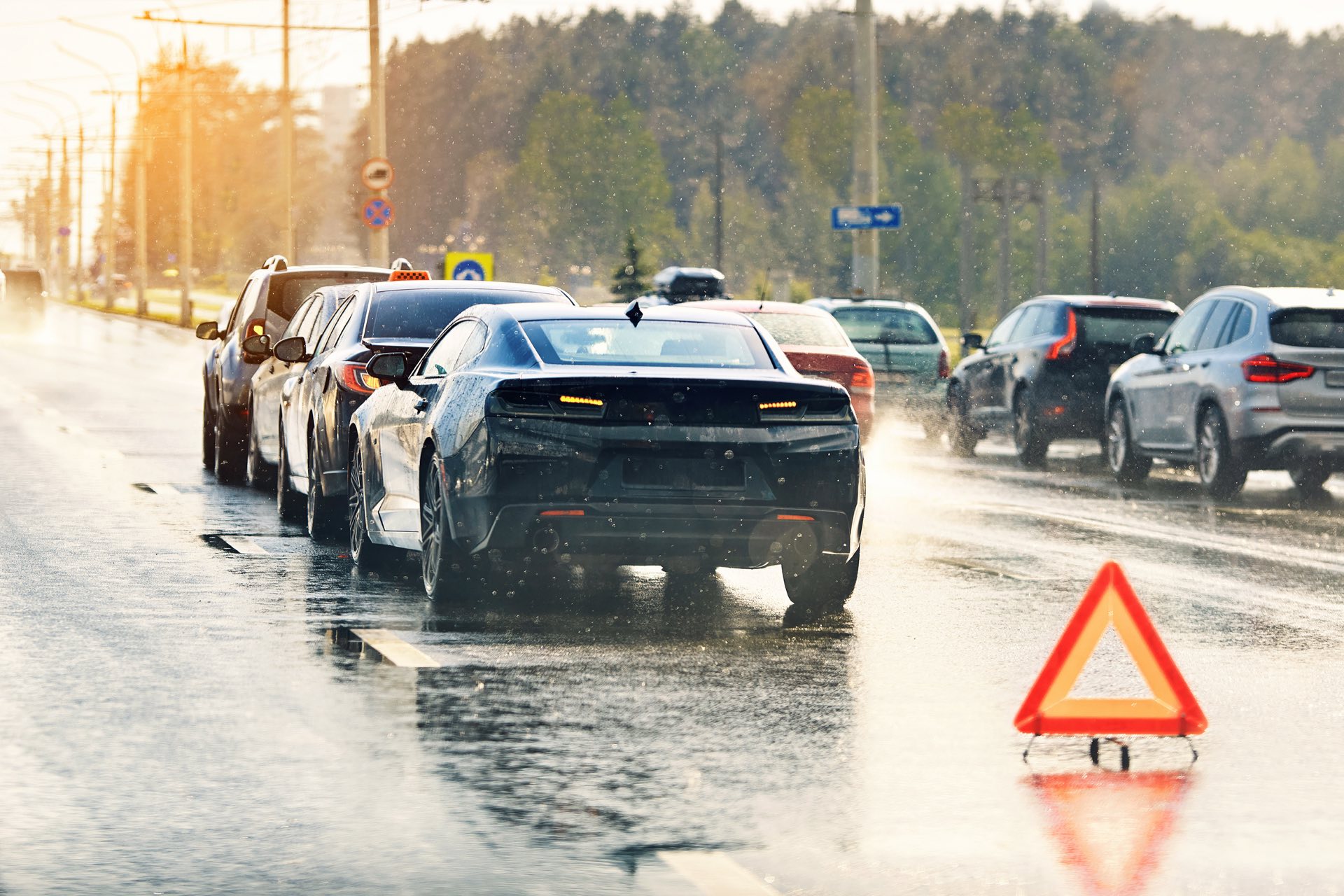
Chain-reaction accidents in Portland are quite common, especially at complex intersections where every driver needs to maintain complete awareness. And unfortunately, these types of accidents often cause extensive damages, including both property damage and bodily injuries.
If you have sustained damages from a multi-vehicle crash in Portland, Oregon, you need to seek representation from a personal injury lawyer. At Henderson Taylor Law Firm, our team of Portland car accident attorneys has extensive experience handling complex car accident claims, including those involving multiple vehicles.
Keep reading to find out what causes multi-intersection collisions and how to prove Oregon accident liability.
What Causes Multi-Intersection Chain-Reaction Accidents?
A chain-reaction accident is when two vehicles collide in some way, and this results in other vehicles colliding as well. For example, one vehicle may rear end the vehicle in front of them, causing that vehicle to roll forward to hit a third vehicle.
These types of accidents are quite common and can be the result of the following:
- Distracted driving
- Speeding
- Road rage
- Driving too close
- Poor weather conditions
- Traffic congestion
Especially in chain-reaction accidents that happen at an intersection, the chances of significant damages is very high. This is because vehicles are coming from multiple directions and there is a higher likelihood of serious collisions, including head-on or T-bone collisions.
How to Determine Fault in Multi-Intersection Chain-Reaction Accidents
When it comes to multi-vehicle chain-reaction accidents in Portland, you need to understand how Oregon law assigns fault. Oregon follows a comparative negligence rule, which, to put it simply, means that more than one party can be at fault. And although this rule can make getting compensation a bit more complex, it can actually help your case when there are multiple vehicles involved in the accident.
An example of how comparative negligence works is if you hold 20% of fault for the accident. You would still have the right to pursue compensation, except your settlement would be reduced by 20%.
Also, with the comparative negligence rule, anyone who holds over 50% of fault for the accident will not be eligible to receive compensation.
Especially in multi-vehicle accidents, proving fault is crucial. This is because you need to establish that the other parties held a higher percentage of fault than you did, not only so that you can get compensation, but that you can get the highest amount of compensation.
Common Challenges With These Types of Claims
Whether you were injured or your property was damaged in the collision, you’re most likely entitled to receive compensation. But that doesn’t mean that this process will be easy since multi-vehicle accidents can be quite challenging to navigate.
Here are some examples of the most common challenges with these types of claims:
- Chain initiation: With most multi-vehicle accidents, investigators will want to determine who initiated the chain-reaction crash, as that individual will be held most at fault. Depending on the circumstances, this can be difficult to determine, and there is a possibility of the wrong driver being held responsible.
- Multiple insurers: Any auto accident that involves multiple insurers will automatically make these types of claims more complex. Not only does this impact how you receive compensation, but it also means that more investigations will be going on and more insurance companies may try to contact you.
- Longer process: Most multi-vehicle accident claims take longer to resolve due to multiple investigations going on and potential disputes. This is often the case if the fault isn’t clear or if the insurance companies are trying to lowball you.
- Fault percentages: Oregon’s comparative negligence rule strives to create a fair outcome for everyone, but it can also make multi-vehicle collisions more complicated. For example, insurers may try to shift the blame, even slightly, which can impact your right to receive compensation.
- Insurance limits: In some cases, one insurer may be held more responsible than the others, which can result in policy limits. Although Oregon requires a certain level of insurance coverage, if multiple drivers are pursuing damages against one policy, there most likely won’t be enough for everyone.
Evidence Needed When Proving Multi-Intersection Chain-Reaction Liability
The evidence you need to prove liability in a multiple vehicle accident will depend on the specific circumstances. However, there are a few different types of evidence that most auto accident claims use:
- Dashcam footage
- Surveillance camera footage
- Eyewitness testimony
- Expert analysis
- Photos of property damage
- Photos of bodily injuries
- Doctor’s notes
- Medical bills
- Police report
When you work with a pile-up accident lawyer in Portland, they can help you gather all of the evidence you need. Also, they can handle negotiation on your behalf so that you aren’t pressured into accepting a low settlement offer.
Hire an Experienced Car Accident Attorney at Henderson Taylor Law Firm
Although chain-reaction accidents in Portland are notoriously more complex, this doesn’t mean that you cannot still receive a fair settlement. It is your right to file a claim to receive compensation, which is often necessary if you have sustained bodily injuries from the accident.
At Henderson Taylor Law Firm, our personal injury lawyers in Portland, Oregon, are here to help you pursue compensation by filing a strong claim. For expert legal representation from one of our attorneys, contact us today at 360-737-1478 or fill out our online form.
FAQ Section
Can more than one driver be responsible?
Yes. Oregon follows a comparative negligence rule, which means that different drivers may hold a percentage of fault for the accident. And in claims involving a chain-reaction accident, the drivers who initially collided will usually be held more at fault.
What happens if several insurance companies are involved?
Each insurance company will perform its own investigation, and one insurer may be held more responsible than the others depending on the percentage of fault.
Can I recover damages if I was partially at fault?
According to Oregon’s comparative negligence rule, as long as your percentage of fault doesn’t go over 50%, you are still entitled to receive damages. Just keep in mind that your percentage of fault will reduce the amount of compensation you could receive.