



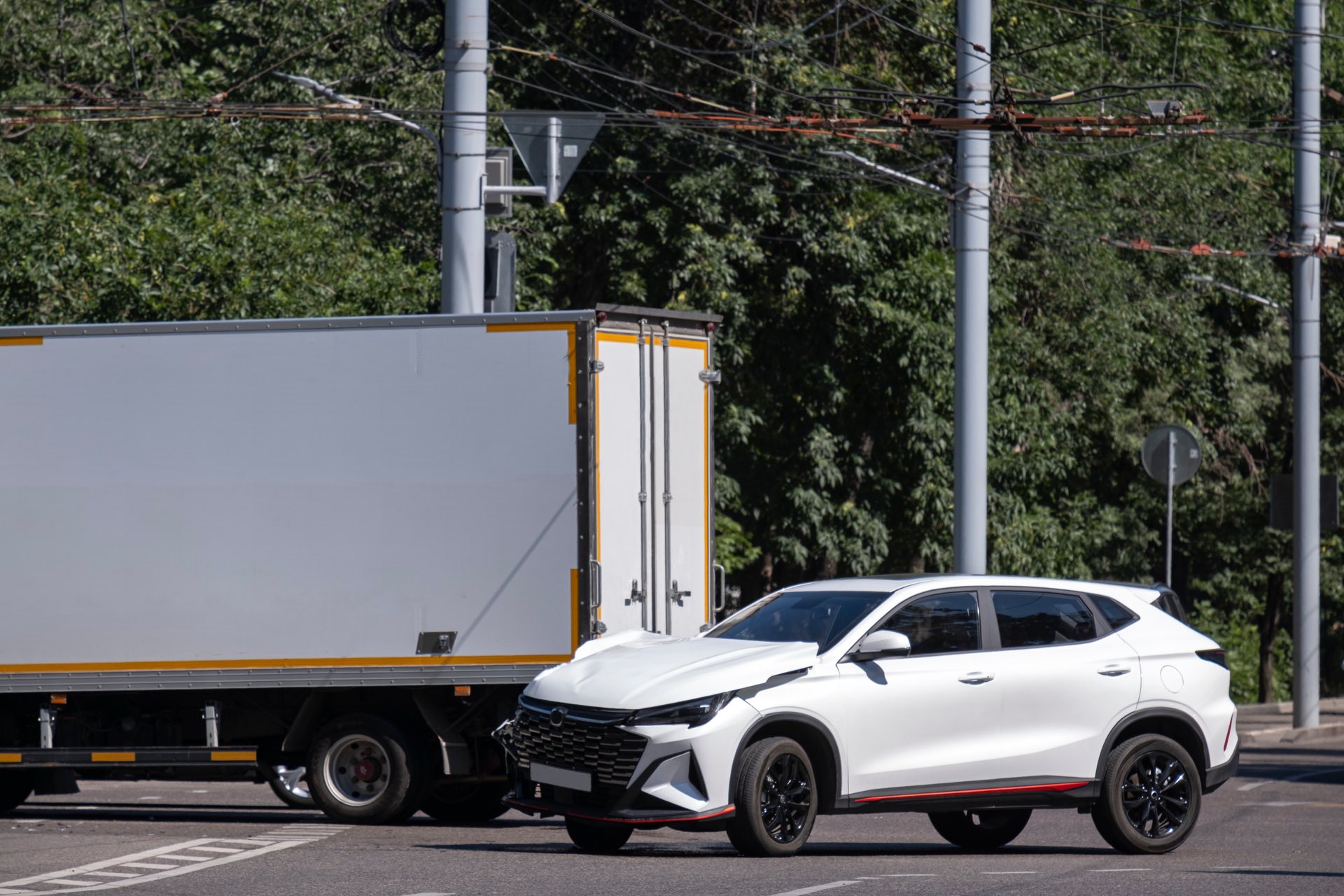
Say a truck blocks an intersection in Portland, Oregon, leading to a collision involving another vehicle or several other vehicles. If this has happened to you, you are probably wondering who is to blame and who can be held legally liable when you file a claim.
If you’re the victim of a commercial truck accident in Portland, it’s your right to pursue compensation, which is why you should get the help of an Oregon truck accident lawyer. At Henderson Taylor Law Firm, our team of Portland truck accident attorneys has extensive experience handling truck accident cases, including more complex or unusual cases.
So, keep reading to find out how you can prove liability for an accident involving a truck blocking an intersection in Portland, Oregon.
Scenarios Where a Commercial Truck Might Block an Intersection
Because of the size of commercial trucks, it isn’t uncommon for a truck to block an intersection in Portland, Oregon, increasing the risk of collisions with other vehicles. In many cases, these scenarios result in multiple vehicles colliding if they don’t have enough time to respond.
Here are some examples of when a commercial truck may block intersections in Portland:
- Wide turns: If a truck needs to make a wide turn, it’s very likely that it will completely block several intersections, potentially hindering oncoming traffic.
- Backing up: When a commercial truck needs to back up, it can often swing in one direction, blocking several intersections and creating a significant blind spot for other motorists.
- Traffic congestion: Truck drivers may not be able to navigate as efficiently or safely in significant traffic, resulting in them accidentally blocking intersections while they are on route.
It’s also worth noting that trained truck drivers should be able to avoid situations where they block intersections. So, if a commercial truck does block an intersection in Portland, causing a collision, it is likely due to driver error, improper route planning, or inadequate training.
Understanding Oregon’s Liability Laws
Oregon has an at-fault system, which means that you could hold the person who caused the accident responsible for your damages. It also follows a comparative negligence system, which means that multiple parties can be at-fault for the accident. When this is the case, each person is assigned a percentage of fault, which will be subtracted from the compensation they could receive.
In claims involving commercial trucks blocking intersections, this can make things a bit complex. Sometimes other drivers may hold a percentage of fault if they failed to respond in time, which contributed to the collision. For example, if a driver doesn’t respond in time to a commercial truck blocking an intersection because they’re on their phone, they would be partially at fault.
Determining Liability In These Types of Collisions
Now that you know how Oregon assigns liability in truck accident cases, how do you determine liability when a commercial truck blocks an intersection? Liability for any accident involving a commercial truck can feel confusing since multiple parties could be at fault.
Usually, the truck driver will hold some level of liability, especially if they failed to yield, were driving while fatigued, violated traffic laws, or they were driving while distracted. However, it’s also very common for the trucking company to hold liability as the employer.
Additionally, the trucking company may be held directly responsible for the accident if they didn’t train the driver, had bad hiring practices, skipped truck maintenance, or didn’t enforce federal standards for its drivers.
In less common cases, other motorists or a third party may hold a percentage of liability.
How to Prove Liability If a Commercial Truck Blocks an Intersection in Portland, OR
Truck collision claims in Portland are notoriously challenging since trucking companies aren’t always cooperative. But with that being said, these types of claims usually result in significant settlements since commercial trucking companies and drivers hold a higher degree of responsibility when it comes to keeping other motorists safe.
So, here are some examples of the types of evidence you can use to prove liability when a commercial truck causes an accident by blocking an intersection:
- Dashcam footage
- Traffic camera footage
- Witness statements
- Expert testimony
- Police reports
- Photographs of the collision scene
- Blackbox data
- Driver’s logs
Before you move forward with your claim, you should also get the help of a truck accident attorney in Portland, Oregon. An attorney will have experience with these types of claims and can help you gather the evidence you need to prove liability so that you get the compensation you deserve.
Hire an Experienced Truck Accident Attorney at Henderson Taylor Law Firm
Although intersection truck crashes in Oregon can be more complex than a standard auto accident, this doesn’t mean that you can’t get the compensation you’re entitled to. It’s your right to pursue compensation after a blocked intersection accident, especially if the situation was the result of truck driver negligence.
At Henderson Taylor Law Firm, our Portland truck accident attorneys can assist you in gathering the evidence you need to prove liability without a doubt. So, for expert legal representation from one of our attorneys, contact us today at 360-737-1478 or fill out our online form.
FAQ Section
Can the trucking company be responsible?
Yes. In fact, the trucking company is usually held mostly liable for truck collisions since it is the employer and takes responsibility for the truck driver. The trucking company may have also directly contributed to the accident by not training the driver adequately, hiring a bad driver, not maintaining the truck, or not ensuring the driver was maintaining federal regulations.
What if another vehicle also contributed to the crash?
Because of Oregon’s comparative negligence system, the other driver would hold a percentage of fault, which would be subtracted from the compensation that driver could receive. For example, if the driver is 20% at fault, they could only recover 80% of their compensation.
How is fault determined?
Different types of evidence can help paint a picture of how the accident occurred and whether this was the result of the driver, the trucking company, or a third-party. Although other motorists can also hold a percentage of fault, they aren’t usually entirely at fault.